
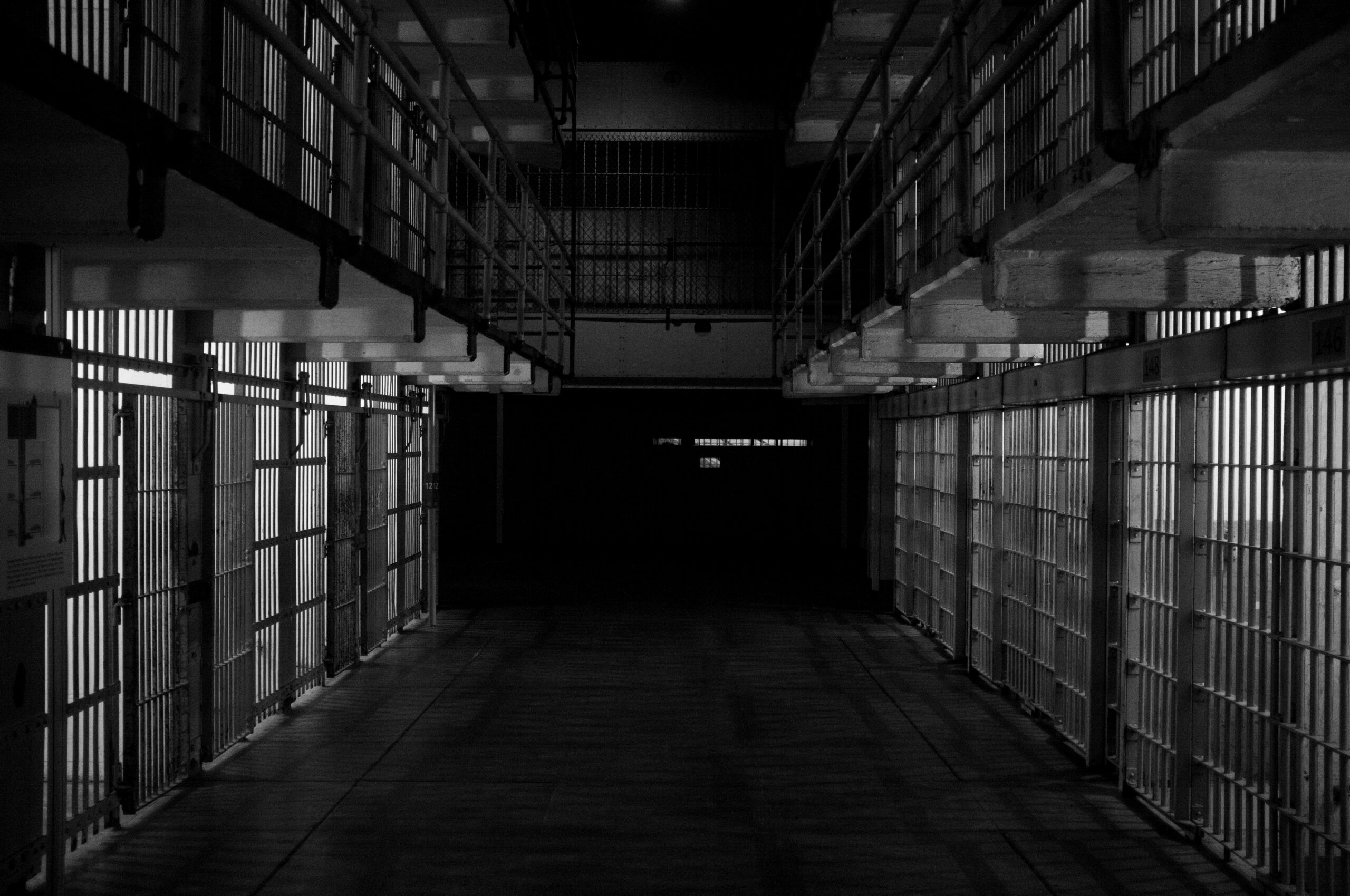
Fact – The Constitution of the United States, within the Eighth Amendment, states that there shall be no cruel and unusual punishments.
The Reality – In many regions of the United States, prisoners’ constitutional rights are being violated daily. The prison industrial complex is a multi-pronged apparatus that is responsible for what scholars describe as mass incarceration. Locked away and hidden from society, these individuals—many of whom have been convicted, as well as some who are awaiting trial—are left in the hands of the warden and the state. For many, the thought of prisoners’ rights does not even make the top 15 priority list.
These are a few narratives that help shape the story. The first is that crime should always be accompanied by punishment. The second is that if you have committed a crime, then you are a threat to society. The last is that by following all the laws, you will be able to circumvent the prison industrial complex and escape the clutches it has on society.
The truth? It’s time to examine these narratives and place them under a microscope. Why? Even though this is a national issue, it is also a local one. Here in Georgia, advocates, journalists, and federal investigators have raised serious concerns about the Department of Corrections, with some describing it as among the most troubled in the country. That concern is reinforced by a three-year investigation by the Department of Justice into the operations and procedures that exist within Georgia’s prison system (United States Attorney, Northern District of Georgia).
This investigation led to some startling and disturbing findings. According to U.S. Attorney Ryan K. Buchanan, “Individuals incarcerated by the Georgia Department of Corrections should not be subjected to life-threatening violence and other forms of severe deprivation while serving their prison terms.” He followed that up by stating that the findings of the Civil Rights of Institutionalized Persons Act investigation “reveal grave and diffuse failures to safeguard the men and women housed in its facilities, including disturbing and increasing frequencies of deaths among incarcerated people.”
Assistant Attorney General Kristen Clarke of the Justice Department’s Civil Rights Division had this to say about their assessment of the Georgia Department of Corrections: “Our findings report lays bare the horrific and inhumane conditions that people are confined to inside Georgia’s state prison system.” She further added that the investigation exposes “long-standing, systemic violations” stemming from “complete indifference and disregard for the safety and security” of incarcerated individuals. She described conditions in which people are assaulted, stabbed, raped, and killed, or left to languish inside facilities that are woefully understaffed. She also noted that inmates are often relegated to conditions marked by fear, filth, and neglect.
There are approximately 34 state-run prisons in Georgia, housing more than 50,000 incarcerated individuals—one of the larger prison populations in the nation. Location doesn’t seem to matter, as facilities spread throughout the state have reported similar issues. One of the more widely reported examples is in the heart of Middle Georgia at the Bibb County Jail in Macon, Georgia. Public reporting and accounts have described high levels of violence, unsanitary conditions, overcrowding, and lack of medical attention. In some reported instances, dozens of inmates have been forced to share a single toilet, with feces and other substances found in living areas—conditions described by observers as both hazardous and inhumane.
The situation has drawn concern from federal lawmakers. Georgia’s U.S. Senators, Raphael Warnock and Jon Ossoff, issued a joint statement urging further federal review, citing the severity of reported health, safety, and civil rights concerns affecting both incarcerated individuals and staff.
All across the state of Georgia, prisoners are reportedly fighting for their lives within some of the most inhumane conditions. The only way to find some resolution is to bring more awareness to the situation. This is why the three narratives listed earlier are so important to break through. Here’s how that’s accomplished: educating the public on what is going on behind cell doors is the first step. By highlighting these conditions, we can demonstrate that being an inmate does not disqualify someone from humanity; it makes them just as human as any other person. Once we begin to understand that, we will be better positioned to advocate on behalf of everyone.
*This is the first in a series examining the conditions, policies, and narratives shaping Georgia’s prison system and the broader issue of mass incarceration in the United States.
Mike Jones
Mike Jones is a Warner Robins-based writer, spoken word artist, and community organizer whose work sits at the intersection of liberation theory, civic education, and lived experience. As President of the Community Resource Network and a digital media storyteller with Progress Georgia, he brings a systems-level lens to the stories that shape how we understand justice, power, and accountability. His writing challenges the narratives we inherit and interrogates the structures we rarely question.
0 Comments